
Personalized Outbound Strategy
Get The Right Outbound Strategy In Minutes
Enter your email to get a custom plan & stack recommendation for your business
It's being carefully crafted by AI
Please check your mailbox in 5 minutes
If you are searching for Adapt.io, you are likely trying to find leads faster.
I looked into Adapt when building lead lists started taking too much time.
Instead of using multiple tools, I wanted one place to find and enrich contacts.
Adapt.io promises a large B2B database, better targeting, and easy list building.
It also claims to help you reach decision-makers with accurate data.
But from my experience, having data is not the same as generating pipeline.
So before paying for Adapt, it’s important to understand what it actually does.
In this review, I break down how it works, what you get, and where it falls short.
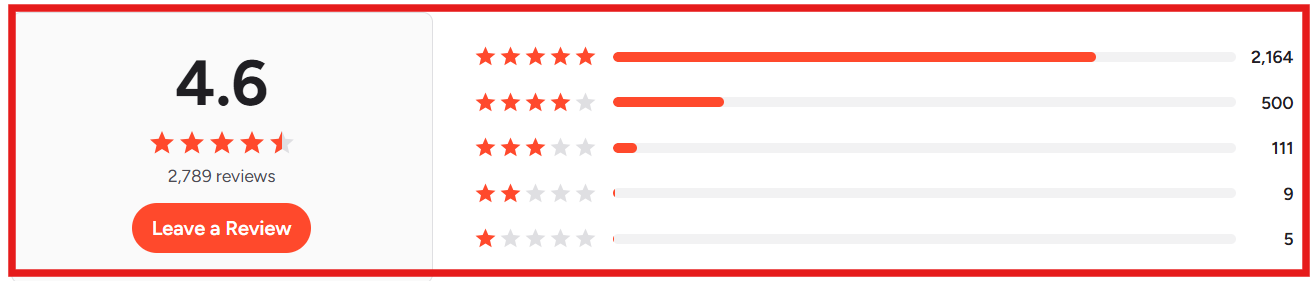
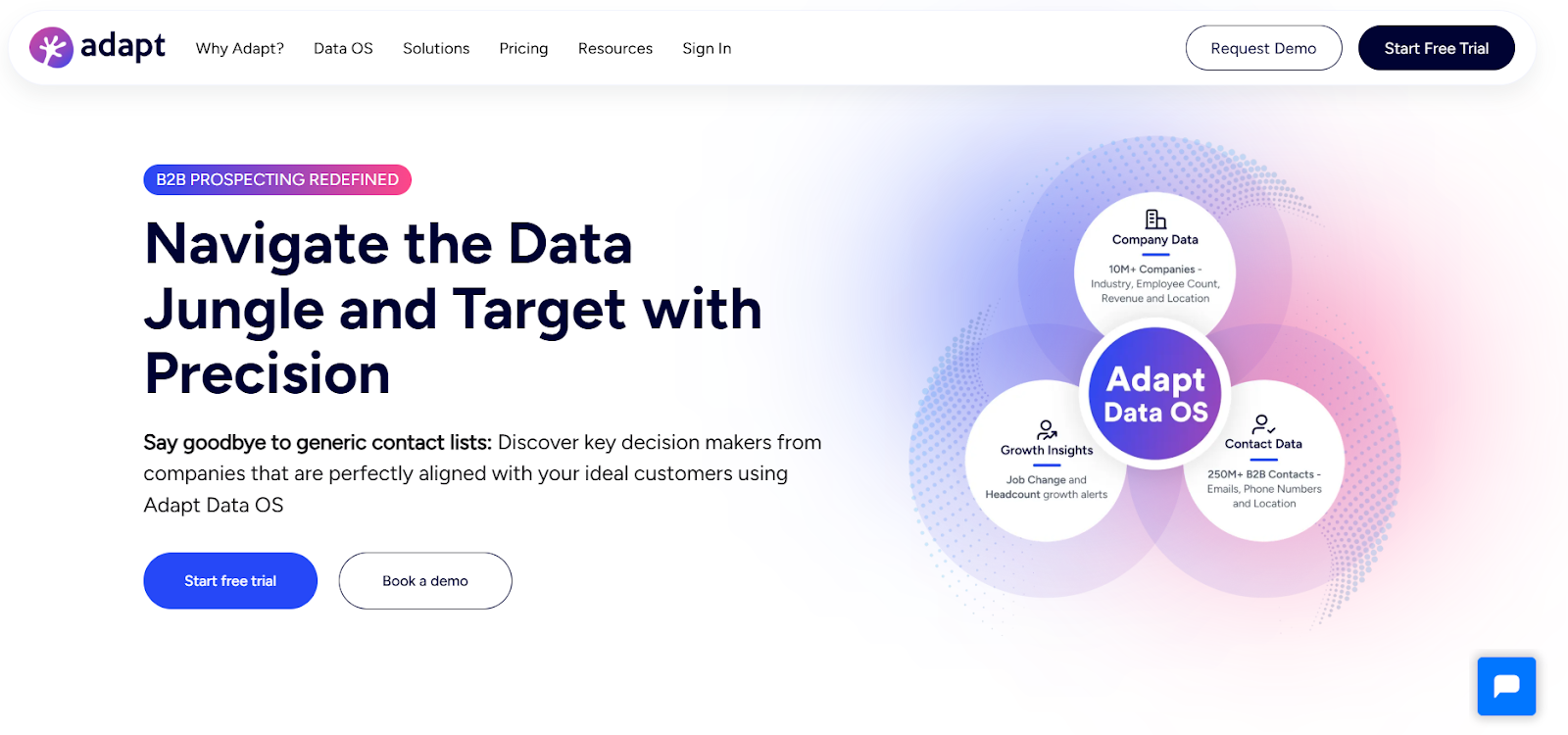
Adapt.io is a B2B lead intelligence platform used to find and access decision-maker contact data.
It helps identify companies and contacts that match specific targeting criteria like job title, industry, company size, and location.
The platform provides access to a large database with 250M+ contact profiles and 10M+ companies for prospecting.
It also includes data enrichment features that add 50+ attributes to existing CRM records to keep data updated.
Users can build lead lists, export contacts, or integrate data into workflows using APIs.
Overall, it is designed to support lead generation and data enrichment for sales and marketing teams.
Before using Adapt.io, it helps to understand how the platform actually works.
Most issues come from expecting it to do more than it’s built for.
Adapt.io works as a B2B data platform focused on prospecting and enrichment.
From my experience, it starts with search.
I define filters like job title, company size, industry, and location.
The platform then shows matching contacts and companies.
Next comes list building.
Contacts can be grouped and saved into lists for later use.
After that, enrichment improves the data.
It adds firmographic and technographic details to each contact.
This helps make the list more useful for targeting.
Another layer is signals.
Job changes and funding updates show which accounts are active.
There is also an API.
It helps move data into other tools and keep it updated.
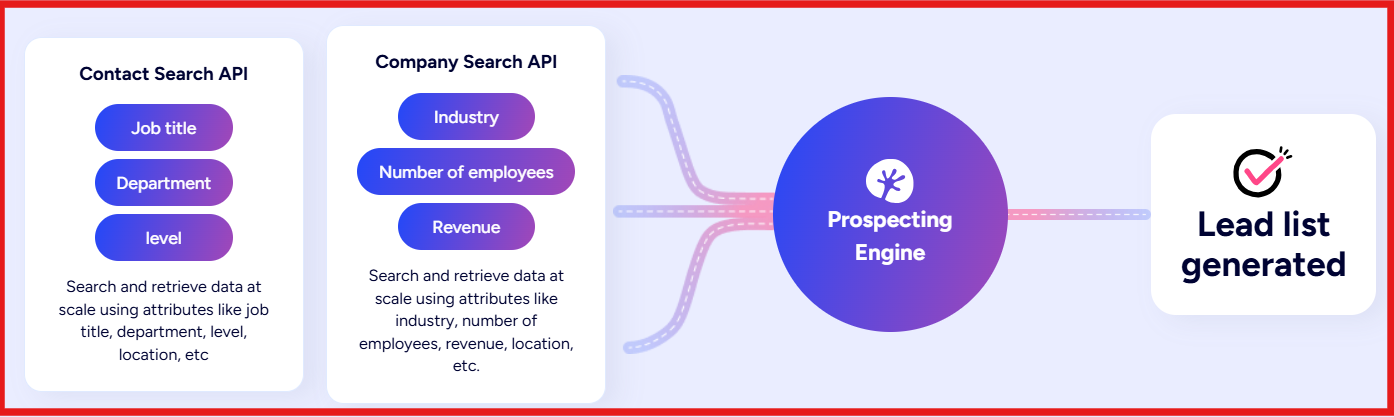
From my experience, the flow is clear.
Search → list → enrich → export or sync.
It handles data well, but outreach happens outside the platform.
Here are the top features of Adapt.io:
Adapt.io is generally reliable for finding B2B contact data, but it is not fully accurate.
It provides emails, phone numbers, and company data.
It uses multiple data sources like public data, user inputs, and automated systems.
It also applies validation methods and regular updates to keep data usable.
From my experience, the data is structured and easy to use.
Basic fields like company, role, and email are usually available.
Some users also mention it helps find contacts quickly.

At the same time, the data is not always accurate.
Some users report wrong or outdated contact details in certain cases.

Accuracy can vary based on region, industry, and role.
So overall, Adapt.io works well for prospecting.
But the data should still be checked before outreach.
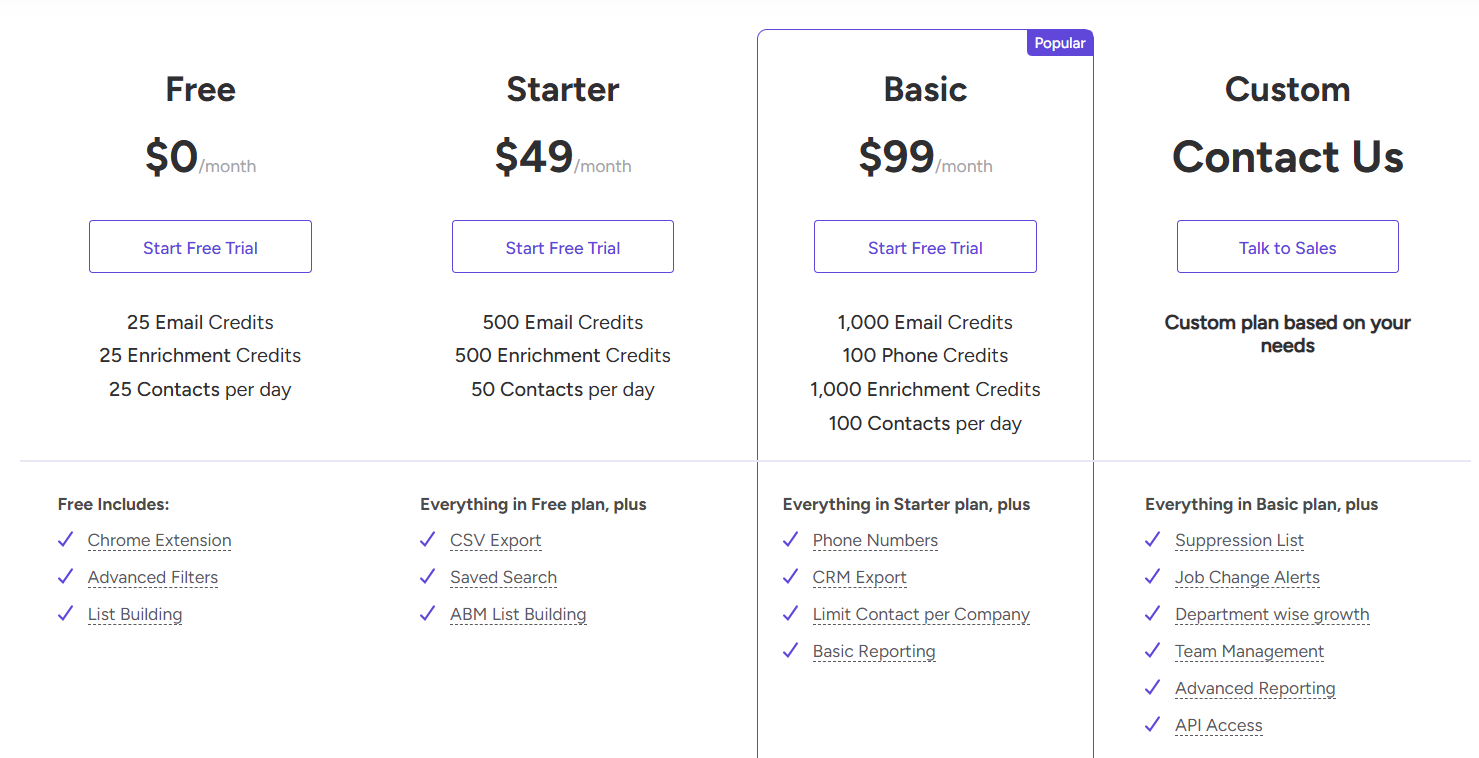
Adapt.io has multiple plans.
Each plan comes with different credits, daily limits, and feature access.
From my experience, pricing depends more on credits than the monthly cost.
Higher features like API access and advanced workflows are only available in custom plans.
So while the starting price looks low, actual usage depends on how many credits are needed.
Before using Adapt.io at scale, it’s important to understand its limits.
From my experience, most restrictions come from credits and daily caps, not the features.
So while Adapt.io works well for controlled prospecting, these limits can slow down larger outbound workflows.
Adapt.io may look useful if you want to find leads, enrich data, and build lists in one place.
But the credit system and daily limits can slow things down for some teams.
The pricing depends on credits, so it’s harder to estimate usage as you scale.
On top of that, some features like API and advanced data are only in higher plans.
Good results usually come when you manage credits and targeting carefully.
Adapt.io fits teams that want focused prospecting with controlled usage.
If you want more flexibility while scaling, tools like Leadsforge felt easier for me to use day to day.
Adapt.io works for structured prospecting, but credits and daily limits slow things down as you scale.
Plans limit how many contacts you can access each day.
Usage also depends on credits.
This makes it harder to move fast.
For a more flexible workflow, Leadsforge felt like a better option.
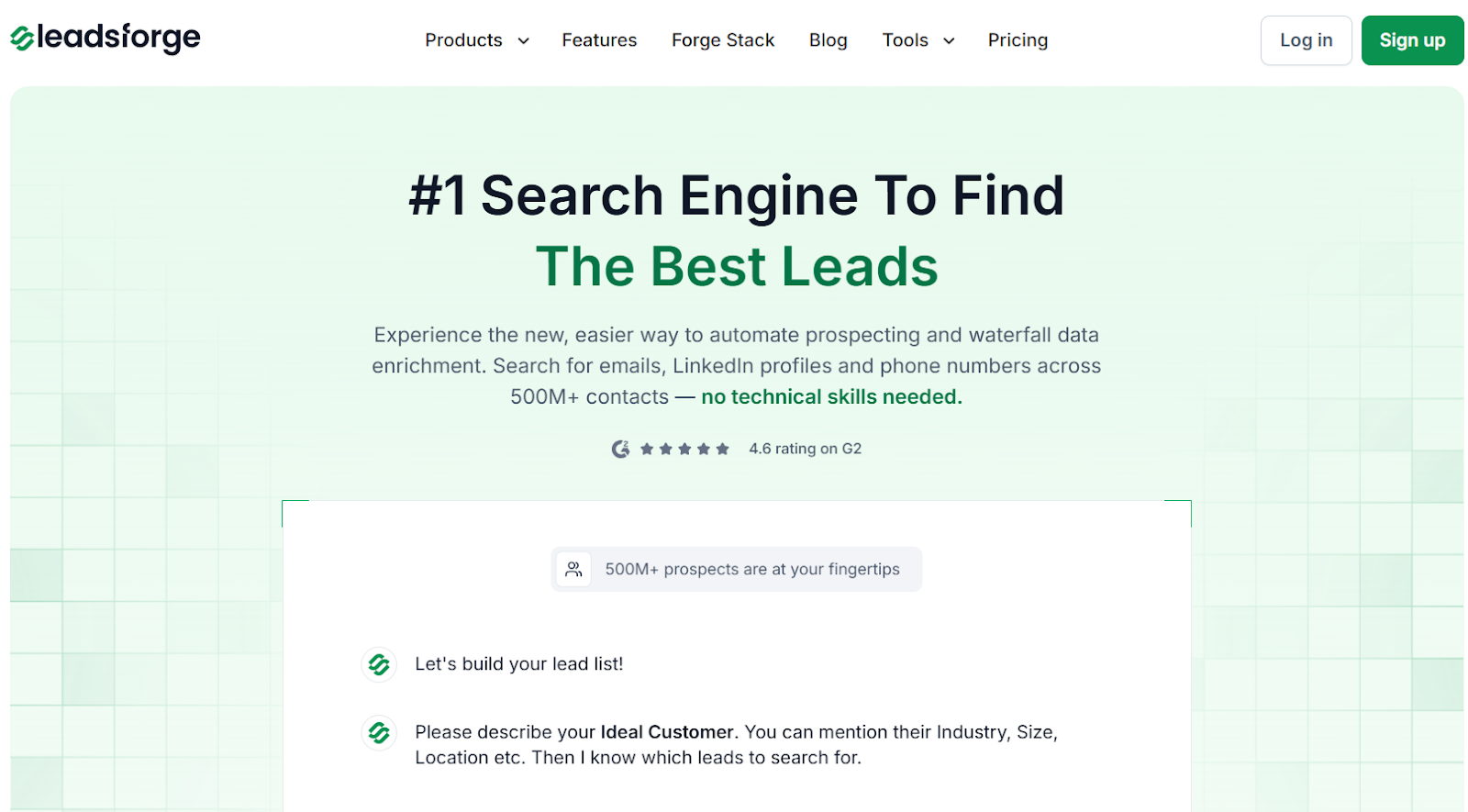
Leadsforge is a lead generation platform that works like a search engine.
I describe my ideal customer, and it finds emails, LinkedIn profiles, and phone numbers instantly.

The chat-based interface keeps things simple, even when the data work is complex.
Another difference is how data is handled.
Leadsforge uses waterfall enrichment.
If one source fails, it checks others automatically.
This usually gives cleaner lists and better match rates.
Pricing is easier to manage.
With Adapt.io, $49–$99/month gives 500 to 1,000 credits with daily limits of 50 to 100 contacts.
With Leadsforge, I get 2,000 export credits for $49/month, and unused credits roll over instead of expiring.
That makes a big difference when planning campaigns.
If you want more usable credits and fewer limits, Leadsforge felt easier to use day to day.
Enter your email to get a custom plan & stack recommendation for your business
Please check your mailbox in 5 minutes
Adapt.io works well for structured prospecting and small-scale usage.
But the credit system and daily limits can slow things down as you scale.
You spend more time managing usage than actually building pipeline.
So yes, Adapt.io is worth it for small, controlled prospecting.
If you want more flexibility and faster lead generation, Leadsforge felt easier for me to use day to day.
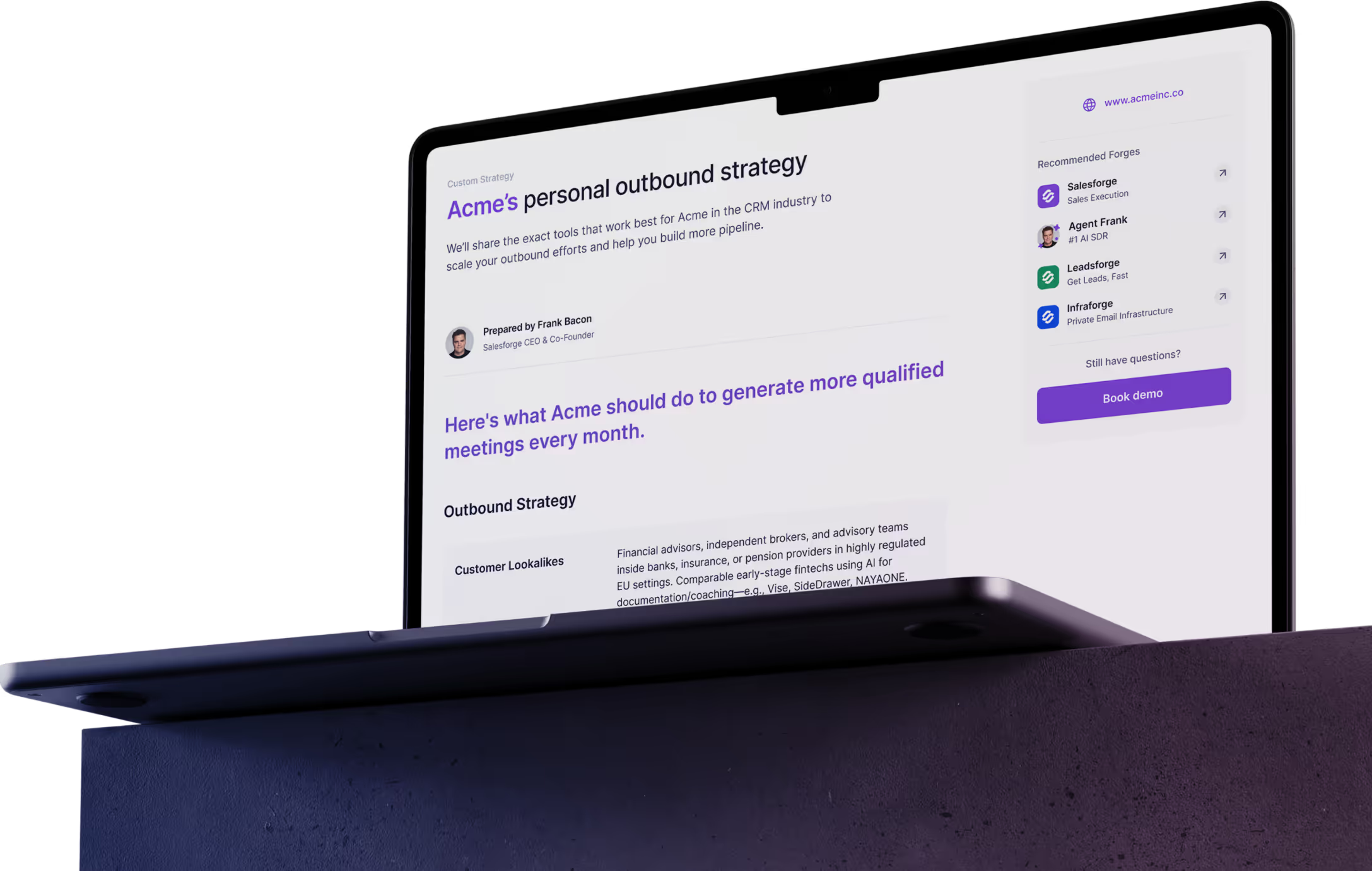
And once the list is ready, I can push it into Salesforge and start outreach immediately.
You can try Leadsforge and see if it fits your workflow better.